
For most passengers, a smooth landing is the ultimate sign of a successful flight. The gentle chirp of tires and a barely-noticeable touchdown are met with silent sighs of relief. However, at some of the world’s most challenging airports, a soft landing isn’t just unlikely: it’s actually dangerous.
Aviation professionals measure touchdown quality not by passenger comfort, but by safety parameters. Factors like terrain, runway length, and local wind conditions dictate how an aircraft must be flown onto the tarmac. This article covers five notorious airports where rough, firm, and prompt touchdowns are the standard operating procedure.
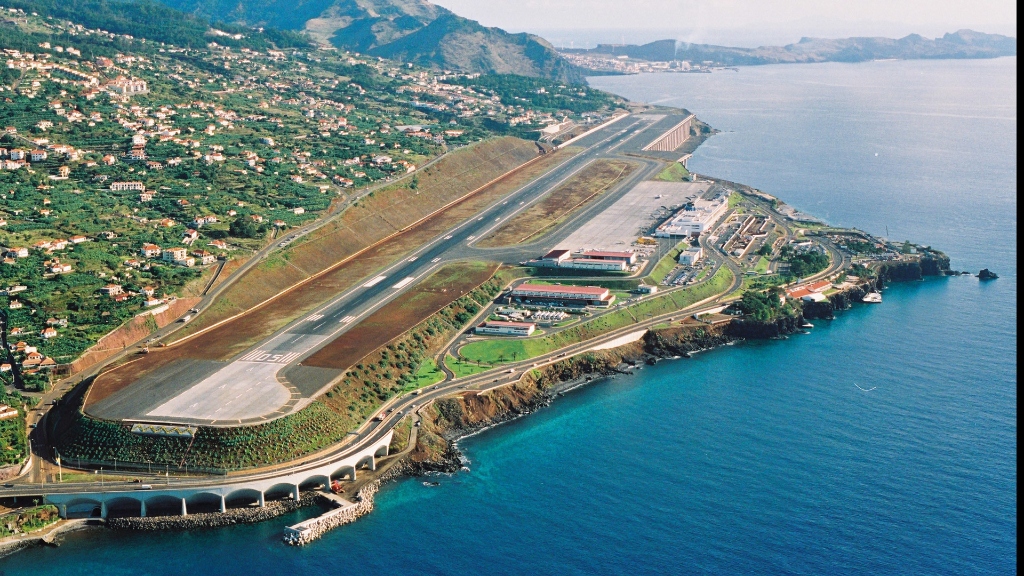
Figure 1: High-performance approaches require precise energy management and firm touchdown execution. (Illustration.)
Madeira Airport (FNC), Funchal, Portugal
Madeira Cristiano Ronaldo Airport is well known among pilots. Nestled between steep mountains and the Atlantic Ocean, the airfield has severe wind shear and mountain waves. The runway itself was so short that in 2000, engineers had to build a massive extension supported by 180 concrete pillars over the ocean.
The real challenge here is the wind. As Atlantic gusts hit the island’s mountainous spine, they spill over onto the approach path, creating sudden updrafts and downdrafts. Pilots cannot rely on autopilot; they must fly a visual approach, adjusting for rapid airspeed fluctuations. A firm landing here is crucial to ensure the landing gear tires spin up instantly and gain traction on the wet or wind-swept concrete.
London City Airport (LCY), United Kingdom
London City Airport sits in the middle of the Royal Docks, surrounded by Canary Wharf skyscrapers and residential developments. To avoid noise pollution and clear the surrounding tall structures, the airport mandates a steep approach angle.
While a standard glideslope is a gentle 3.0 degrees, London City requires a steep 5.5-degree approach. Flying down a slope this steep requires pilots to deploy spoilers (speedbrakes) and maintain a nose-down attitude until very late. When they flare to flatten the trajectory just before the ground, they have very little time. Combined with a short runway (only 1,508 meters), pilots must plant the aircraft firmly on the ground to begin braking immediately. Floating here to get a "soft" landing could mean running out of runway.
"When a runway is short or contaminated with water, trying to float the plane for a smooth landing is a cardinal sin. Every second you float is 200 feet of runway lost. We are trained to fly the aircraft firmly onto the target zone, ensuring the weight is transferred to the wheels so the ground spoilers deploy and the brakes can work immediately."
Wellington International Airport (WLG), New Zealand
Wellington Airport sits on a narrow strip of land between hills, funneling the notorious Cook Strait winds straight across the runway. The result is persistent, powerful crosswinds that regularly exceed 35 knots.
Approaching Wellington often involves a technique called "crabbing," where the aircraft is flown angled sideways into the wind to maintain a straight path. Just before touchdown, the pilot must align the nose with the runway and land firmly on the main gear to prevent the crosswind from pushing the plane sideways off the center line. It’s a high-workload environment that makes passenger applause a common occurrence.
Gibraltar International Airport (GIB), Gibraltar
Gibraltar is a British Overseas Territory dominated by the massive Rock of Gibraltar. The runway is bordered by water on both ends, and incredibly, a busy four-lane highway crosses right through the middle of the runway, closing whenever a plane lands or takes off.
The Rock of Gibraltar creates severe aerodynamic rotors. When easterly winds blow, they wrap around the rock, generating pockets of severe turbulence and sudden drops in wind speed directly on the short final approach. Pilots must fly with active, aggressive corrections. The touchdown must be positive and direct to ensure the aircraft is stabilized on the short 1,680-meter strip.
Paro Airport (PBH), Bhutan
Paro Airport is nestled in a deep valley surrounded by Himalayan peaks soaring up to 18,000 feet. The approach is so difficult that fewer than 50 pilots in the world are certified to land commercial aircraft here.
The landing is strictly visual: there is no instrument landing system (ILS). Pilots must weave through mountain valleys, turning late to align with the runway only seconds before touchdown. Because of the high altitude (which increases ground speed) and the short runway surrounded by trees and houses, the touchdown must be immediate and firm. There is absolutely no room for error or floating.
Comparing the Challengers: Airport Difficulty Matrix
| Airport | Runway Length | Approach Slope | Primary Hazard | Touchdown Profile |
|---|---|---|---|---|
| Madeira (FNC) | 2,781 m | 3.0° | Severe Wind Shear | Firm / Positive |
| London City (LCY) | 1,508 m | 5.5° (Steep) | Short Runway / Noise | Aggressive / Firm |
| Wellington (WLG) | 2,081 m | 3.0° | Severe Crosswinds | Firm / Aligned |
| Gibraltar (GIB) | 1,680 m | 3.0° | Turbulence / Highway | Positive / Immediate |
| Paro (PBH) | 2,265 m | Visual (Mountain) | Valley / Visual Only | Immediate / Sharp |
Help Build the Touchdown Quality Database
Have you recently experienced a firm landing at London City, or had a nail-biting approach into Madeira? Passenger sentiment and rating data help verify actual operational benchmarks. Submit your rating to the index now.